The Paper Trail to Fairness: Keeping a Human Front Door on a Digital Fund
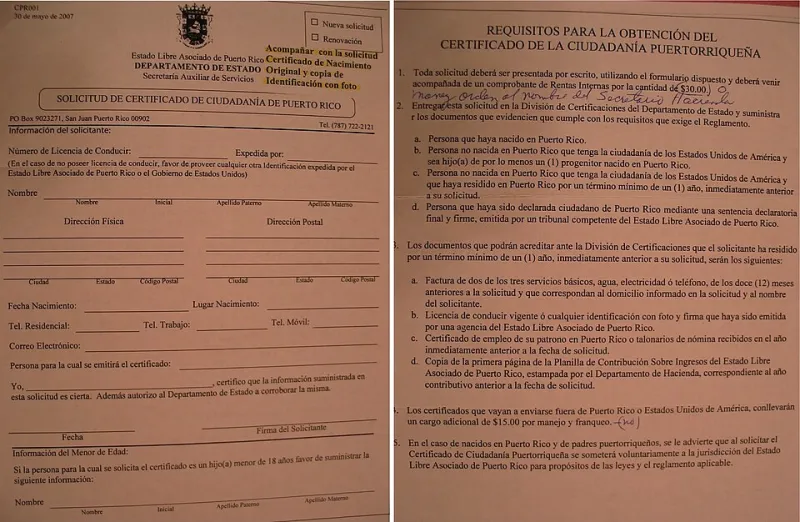
Photo: Application_Form_for_Certificate_of_Puerto_Rican_Citizenship-Front.JPG: Mercy11 Application_Form_for_Certificate_of_Puerto_Rican_Citizenship-Reverse.JPG: Mercy11 derivative work: Jmundo (talk), Public domain, via Wikimedia Commons
There is a particular kind of envelope that arrives at our office with a little too much sellotape. It is usually handwritten, sometimes padded with a folded leaflet, and almost always posted a day or two before a deadline. Inside, there is an application form completed in careful block capitals. It is not sleek. It does not ping with a confirmation email. But it is a door being knocked on, and in 2026 it still matters.
When The Mayor's Hope Fund reviews how people reach us, the conversation often turns to efficiency. Online portals reduce administrative burden. They timestamp submissions, validate mandatory fields and make reporting simpler. These are real advantages, and we use them. Yet a fund that assumes every applicant can use a digital portal is a fund that quietly decides who gets to apply. That is not a neutral act.
The Small Details That Reveal a Barrier
The evidence is rarely dramatic. It appears in the applicant who begins the online form on a library computer and runs out of session time before uploading their constitution. It shows up when a treasurer with years of experience cannot get past a password reset because the group's email address is managed by a volunteer who has moved away. It is the phone call on the final afternoon, asking whether a scanned signature is acceptable because the group has no scanner.
None of these are failures of commitment. They are failures of assumption. A community fund that only accepts digital applications may believe it is open to all, but its front door is narrower than it appears. For small groups — a residents' association, a lunch club, a youth theatre company run out of a church hall — the person applying is often the same person doing the safeguarding checks, the room bookings and the tea rota. Time is not an infinite resource.
What Paper Actually Protects
Accepting paper is not nostalgia. It is a practical route to fairness. A handwritten form can reveal context that a drop-down menu cannot: the group's history, the gaps in its capacity, the fact that its bank account is shared with a parent organisation. A phone call can clarify a budget line in five minutes that would otherwise take five emails. An in-person conversation can turn a confusing set of eligibility rules into a workable next step.
These routes also create a record of support. If someone walks into our office and asks for help completing a form, that is not a loophole. It is an early warning system. It tells us where the process is unclear and where guidance needs to change. In that sense, paper applications and phone calls are not simply alternative formats; they are feedback mechanisms.
The 2026 Picture in Our City
This year, we have continued to see a steady stream of posted applications. Some arrive from groups that have applied before and prefer the familiarity. Others come from organisations making their first approach. Their reasons vary: a lack of reliable broadband, a preference for keeping sensitive financial information off shared devices, or simply a long-standing way of doing things that has never been a problem until a fund decides it is.
The Mayor's Hope Fund does not treat these applicants as exceptions to be managed. We treat them as part of the fund's ordinary business. That means publishing a postal address alongside the online portal. It means keeping a phone line open during office hours and returning calls when we say we will. It means accepting a clear photograph of a signed page when a scanner is not available, and offering a short, plain-English conversation when the form itself is the obstacle.
None of this is glamorous. It does not produce a dashboard metric. But fair grant-making is often built from unglamorous decisions.
Human Help Is Not a Workaround
There is a temptation to describe assisted applications as a workaround — something we tolerate while aiming for full digital take-up. We would rather be honest. A human front door is not a temporary fix. It is a permanent feature of a fund that wants to remain accessible.
That does not mean abandoning digital tools. The portal remains the quickest route for many groups, and we will keep improving it. But improvement should not mean narrowing. A fund can be digital by default without being digital by exclusion. The distinction matters most for the groups least likely to have dedicated administrative time.
Keeping the Door Open
As we approach the end of 2026, our commitment is straightforward. We will continue to accept paper applications. We will keep the phone number visible. We will offer in-person help at published times, and we will make sure that a last-minute envelope is treated with the same care as a last-minute upload.
The Mayor's Hope Fund exists to support civic life in our city, and civic life is not conducted entirely online. It happens in halls, on doorsteps and around kitchen tables. Sometimes it arrives in an envelope with too much sellotape. We should be glad it does.
If you are applying to the fund and the online route is not working for you, please contact us. The human front door is open.