The Paperwork Behind the Welcome: Why Compliance Costs Belong in Every Grant Budget
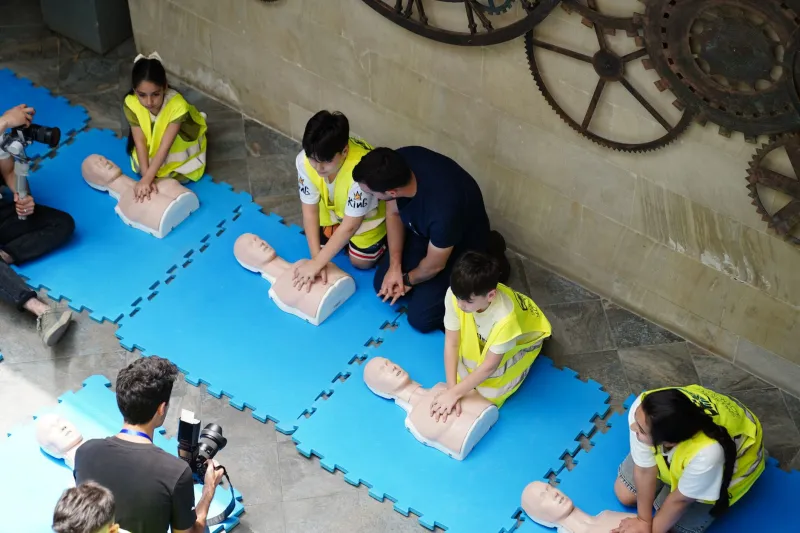
A community hall can be warm, well lit and full of people, and still be one lapsed certificate away from closing its doors. The risk rarely announces itself. It sits in a drawer: a first aid qualification that expired in the spring, a food hygiene certificate held by a volunteer who has since moved away, a safeguarding policy that has not been reviewed since before the pandemic. None of this appears in a photograph of the lunch club. All of it decides whether the lunch club can lawfully continue.
At The Mayor's Hope Fund we spend a great deal of time discussing what a grant will pay for. Less often do we discuss what a grant must quietly underwrite so that the funded activity is safe, legal and open to everyone who needs it. That gap is worth closing.
The costs that never make the poster
Community groups are understandably proud of the visible. A new kitchen, a minibus repair, a set of folding tables: these are tangible, photographable and easy to explain to a member of the public. Compliance is none of those things. It is a renewal date, a training certificate, a policy document reviewed and signed.
Yet the list is long and it applies to almost every group we fund. Enhanced DBS checks for anyone working with children or adults at risk, each carrying an administration cost even where the volunteer does not pay the fee themselves. Food hygiene training for the volunteers who prepare meals. Emergency first aid at work, refreshed every three years. Safeguarding awareness, ideally renewed as guidance changes. Public liability insurance, which for some activities is neither cheap nor optional. Add fire risk assessments, gas and electrical safety checks, portable appliance testing, premises licences, and music licensing for the groups that play recorded music or host a singer at a seasonal gathering, and the annual total for a small organisation can comfortably run into four figures.
None of this is extravagant. It is the price of being trusted with other people's safety.
Why the smallest groups feel it most
A larger charity absorbs these costs within an operations budget and employs someone to track renewal dates. A group run by six volunteers out of a church hall does not. The treasurer is often the person who also runs the raffle, and the renewal calendar lives in their head.
The consequence is not recklessness. It is capacity. When we speak with applicants, the same pattern recurs: compliance is funded last, from whatever remains, or it is funded personally by a volunteer who does not like to mention it. A first aid course paid for out of a volunteer's own pocket is a quiet subsidy to the public purse, and it is not a sustainable one.
There is a fairness dimension too. Groups in wealthier areas can lean on a parent with a professional background, or a local business that covers the insurance. Groups in areas with fewer such connections simply carry a higher relative burden for the same legal obligations. Compliance costs are flat; the means to meet them are not.
The case for a named line
Our argument is not that every application should become an exercise in form-filling. It is narrower and, we think, practical: compliance should be an eligible, visible and predictable cost within a grant budget, rather than something applicants are expected to absorb or conceal.
A named line does three things. It gives applicants permission to plan. It gives panels an honest picture of what a project actually costs to run, so that a decision is not quietly made on an artificially low figure. And it reduces the risk that a grant is awarded for an activity that cannot then proceed because the insurance was never in the budget.
It also protects the funder. A project that closes because a certificate lapsed is a poor return on public money, however good the original idea.
Practical tests for applicants and panels
A few working principles have emerged from our own conversations.
First, separate the essential from the merely desirable. Enhanced DBS checks, insurance and statutory safety checks belong in the essential column; additional specialist training can be planned over time.
Second, match the term of the grant to the renewal cycle. A three-year first aid certificate funded by a twelve-month grant creates a cliff edge. Where a fund can support multi-year awards, it should; where it cannot, applicants should be encouraged to say so.
Third, keep evidence proportionate. A short schedule of costs and renewal dates is usually enough. Asking a volunteer treasurer to submit three quotations for a £40 online course is a burden that serves nobody.
Fourth, recognise that the United Kingdom is not one jurisdiction. Disclosure arrangements differ between England and Wales, Scotland and Northern Ireland, and so do some licensing and safety requirements. A fund that operates across the nations should not design a single compliance template and assume it fits all.
What this means for our own fund
We are reviewing how our 2026 application form treats these costs, with a view to making the line clearer and the guidance plainer. We would rather receive a budget that names insurance and training honestly than one that looks lean on paper and struggles in practice.
There is nothing bureaucratic for its own sake in any of this. A certificate in a drawer is not paperwork. It is the reason a parent can leave a child at a holiday club, the reason an older resident can eat a hot meal prepared by someone else, the reason a hall full of people can be confident that someone knows what to do if things go wrong.
Funding the welcome means funding what stands behind it. The tea urn matters. So does the certificate that lets someone switch it on.