Weighing Every Pound: A Transparent Account of the 2026 Grants Process
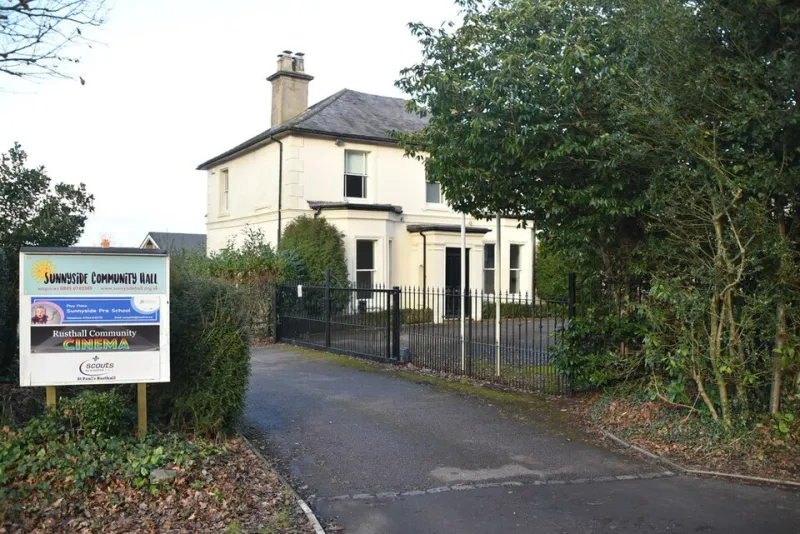
Photo: N Chadwick , CC BY-SA 2.0, via Wikimedia Commons
Every grant round carries a particular kind of tension. There is the optimism of local groups setting out ambitious plans for their neighbourhoods, and there is the hard arithmetic of a fund that must weigh many worthy requests against finite resources. In 2026, that tension feels especially pronounced. Applications to The Mayor's Hope Fund reflect the pressures many communities continue to face: rising running costs, the stubborn persistence of isolation among older residents, and the difficulty smaller organisations have in securing core funding rather than project-specific grants.
Because we ask applicants to be open with us, we think it is right to be open in return. This account explains how the 2026 grant panel works, what assessors look for, and how voluntary groups can present their case with confidence. It does not disclose individual applications or decisions, but it does aim to demystify a process that can sometimes feel opaque from the outside.
Who sits on the panel
The panel is deliberately mixed. It includes trustees of The Mayor's Hope Fund, an independent chair, and community assessors drawn from different parts of the city. Those assessors may be involved in advice services, faith-based social action, youth work, or neighbourhood partnerships. The Mayor's office is represented as an observer, not as a deciding vote. Everyone involved completes a declaration of interests before seeing papers, and anyone with a close connection to an applicant steps out of that discussion.
Before the meeting, panel members read every eligible application in full. They do not rely on summaries alone. A scoring framework helps to structure the conversation, covering the strength of the need, the clarity of the plan, the realism of the budget, and the difference the grant is likely to make. The framework is not a substitute for judgement, but it prevents decisions from resting on impression or anecdote.
What a strong application looks like
The best applications are rarely the longest. They are the ones that explain, in plain English, what problem exists and why the group is well placed to address it. A strong bid usually shows a clear link between the activity and the people it is meant to benefit. It says how many residents will take part, how they will be reached, and what will be different if the work succeeds.
Assessors also look for honesty. A budget that acknowledges the true cost of staff time, venue hire, insurance, and volunteer expenses is more reassuring than one that appears artificially lean. Claims about outcomes should be proportionate. A grant of £2,000 is unlikely to end loneliness across a whole ward, but it may establish a weekly circle that reaches twenty people and gives them somewhere reliable to go. That is a credible and valuable outcome.
Small charities sometimes worry that they lack the polish of larger organisations. In practice, panel members are often struck by the local knowledge that smaller groups demonstrate. What matters is that the application makes that knowledge visible. A few sentences about referral routes, existing partnerships, or the practical obstacles the group has already overcome can be more persuasive than a lengthy list of aspirations.
Inside the decision meeting
The meeting itself is structured but not mechanical. The chair introduces the scoring framework, and applications are discussed in turn. Panel members raise questions, compare evidence, and test assumptions. If an application is unclear on safeguarding, financial controls, or delivery capacity, that is noted. If it is strong but not quite ready, the panel may discuss whether feedback and signposting would be more useful than a declined score.
Financial due diligence takes place alongside the assessment. We check that applicants have the basic governance in place to manage public money: a bank account in the organisation's name, appropriate insurance where needed, and a track record of delivering what they say they will deliver. For newer groups, a fiscal host or an established partner can provide assurance. The aim is not to create unnecessary barriers but to protect both applicants and donors.
Decisions are recorded with reasons. That matters for consistency and for learning. Where an application is unsuccessful, the fund aims to offer feedback that is specific enough to be useful. We cannot always fund every strong proposal, but we can try to ensure that the process is fair, documented, and understandable.
Why saying no is the hardest part
The most difficult moments in any panel are the ones where a good project cannot be funded. Demand consistently exceeds what the fund can distribute, and the gap is not a reflection of any group's worth. A declined application may be well written, locally rooted, and urgently needed. The panel knows this. It is one reason the conversation is taken seriously and why decisions are not rushed.
Saying no also carries a responsibility to say what might be possible. Some applications are better suited to another funder. Some need a smaller pilot before a larger request. Some would benefit from a partnership with a nearby organisation. Feedback is offered in that spirit: not as a polite formality, but as a genuine attempt to help groups strengthen their work and return in a future round.
Practical ways to strengthen a 2026 bid
Applicants can make the panel's task easier by reading the published criteria carefully and checking eligibility before writing. A short conversation with the fund before submission is often more valuable than a last-minute rewrite. Keep the budget honest and the outcomes realistic. Show who will benefit and how they will be involved. Include the practical details that give confidence: safeguarding arrangements, volunteer support, and a clear plan for monitoring.
It also helps to avoid assuming that panel members already know the local context. They may live in the city, but they will not know every estate, community hall, or informal network. Explain the need with evidence where possible, whether that is local data, referral numbers, or the testimony of residents. Use plain language. A clear application is not a simplistic one.
A shared exercise in trust
The grant panel is not a distant tribunal. It is a practical expression of the trust that donors and residents place in The Mayor's Hope Fund. Every application represents effort, hope, and often volunteer time that has already been given freely. The panel's job is to weigh that effort carefully and to allocate funds where they can do the most good.
Transparency does not remove the difficulty of choosing. It does, however, make the choice more accountable. As the 2026 round continues, we will keep explaining how decisions are made and what we learn along the way. Local groups should feel confident applying, not because the answer is guaranteed, but because the process is open, fair, and designed to recognise the real work happening in our neighbourhoods.