A Question Worth Asking: Listening for Hope in Our 2026 Grant Reports
In grant-making, the easy evidence is numerical. A hall reports how many sessions it ran; a food project counts the meals it distributed; a youth club records attendance and volunteer hours. These figures matter. They help trustees steward public money and help panels compare applications fairly. But they do not, on their own, explain whether a community group is becoming stronger or merely busier. That is why the Mayor's Hope Fund has been considering a deliberately modest addition to its 2026 learning: asking grantees a single open question about what gave them hope this year.
Why one open question can sit alongside hard data
An output is a record of activity. Hope is a record of trajectory. A group can meet every target and still feel isolated, exhausted or uncertain about the year ahead. Another can fall short of a planned number and yet build the trust that makes future work possible. Asking what gave people hope invites them to name the conditions that sustain local life: a volunteer who returned after a difficult season, a council officer who answered the phone, a neighbouring charity that shared a van, a repaired boiler that kept a warm room open through February.
None of this replaces monitoring. It complements it. The purpose is not to turn hope into a performance indicator or to invite groups to compete for the most moving story. It is to capture civic impact in the language that communities themselves use, and to give funders a better sense of what helps local work endure.
Designing an audit that feels like listening, not inspection
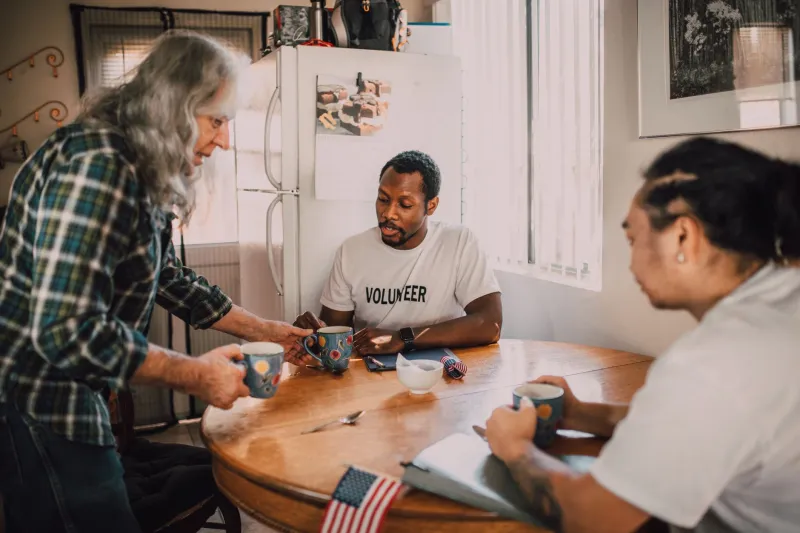
The first principle is low burden. Small groups already spend too much time translating their work into funder language. A hope audit should not add a new essay, a new deadline or a new anxiety. It could be a short optional box on the existing monitoring form, a brief telephone conversation for those who prefer to talk, or a voice note for someone who finds writing harder than speaking. It should be clearly marked as optional and not scored. It should carry no consequence for funding decisions.
A second principle is trust. Grantees should know who will read their reflections, how quotations will be used and whether they will be anonymised. Consent should be specific. A funder that asks for candour and then treats honesty as a risk has misunderstood the exercise. The Mayor's Hope Fund should say plainly that the question has no right answer, that hard experiences are welcome, and that the aim is learning rather than justification.
Three prompts are probably enough: What gave you hope in 2026? What made the year harder than it needed to be? What would help next year? The first invites reflection. The second acknowledges fragility. The third turns listening into practical intelligence for the fund.
What such reflections can reveal
In a city with flourishing parish halls, food banks, youth projects and neighbourhood groups, the themes are likely to be familiar. People matter most: a trustee who stepped forward, a young person who took responsibility, a volunteer who came back after a break. Place matters too: a warm room, a working kitchen, a garden that gives people somewhere to gather. Partnership matters again and again: a school that shared its hall, a business that donated materials, a council department that returned a call.
But a hope audit would also reveal fragility. Groups may speak about the January gap after Christmas giving ends, about volunteer burnout, about transport costs that keep members away, or about digital forms that assume a level of time and confidence not always present. These are not excuses. They are context. A food project reporting stable numbers might explain that hope came from a new referral partnership. A youth club reporting lower attendance might explain that hope came from keeping one hard-to-reach young person engaged through a difficult autumn. Without the question, the funder sees only the number.
Closing the loop matters more than the question
Listening is only credible if it leads somewhere. The Mayor's Hope Fund should publish an anonymised thematic summary alongside its annual report, not a collection of individual stories. It should tell grantees what changed as a result: a simplified monitoring form, an adjusted deadline, a transport line in the budget guidance, or a conversation about the January transition built into winter grants. Reflections could inform panel training, helping assessors read applications with a fuller understanding of local conditions. They should not become an informal scoring criterion.
There is also a discipline in saying what the fund cannot act on. Some barriers are national, some are structural, and some belong to other agencies. Transparency about limits is part of respect. A short summary of what was heard, what will change and what remains outside the fund's control would be more valuable than a polished report that promises everything.
A modest pilot for the year ahead
As 2026 draws to a close, a sensible next step would be a pilot with a small number of grantees, perhaps twenty or thirty, drawn from different sizes and types of project. Invite rather than require. Offer written, telephone and in-person routes. Analyse the themes, publish a short summary in the new year, and discuss the findings with the grants panel before changing any process. Keep the data protection arrangements simple and clear. Above all, do not let a good idea become a heavy form.
Hope is not a soft metric. It is part of the civic infrastructure that allows small groups to keep going. Counting outputs tells us what happened. Asking what gave people hope tells us whether the work is likely to continue, and what the fund might do to help. A grant-maker that listens carefully is better placed to make next year's decisions fairly, transparently and well.