Before the Doors Open: Why Transport Belongs in the Grant Budget
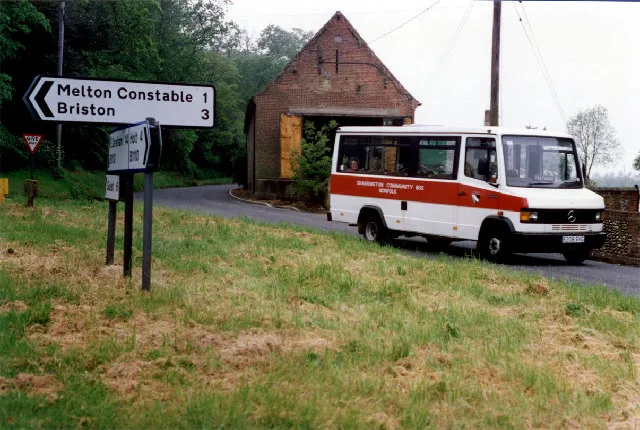
Photo: Martin Addison, CC BY-SA 2.0, via Wikimedia Commons
The part of the grant that rarely gets named
A community grant application will usually describe the activity in careful detail: the weekly lunch club, the youth session, the advice drop-in, the choir rehearsal. It will list room hire, materials, refreshments and volunteer expenses. What it often does not list is the journey.
That omission is understandable. Transport can feel incidental — a practical detail rather than the purpose of the work. But for many residents, the journey is the deciding factor. A free activity is not free if getting there costs £8 in bus fares, requires two changes, or depends on a lift that may not arrive. For disabled participants, an accessible taxi may be the only realistic option. For older residents, a familiar minibus route can be the difference between a weekly social connection and another week at home.
At The Mayor’s Hope Fund, we increasingly see transport not as an administrative afterthought but as part of the grant’s core purpose. If a project is funded to bring people together, then the means of bringing them together deserves a clear line in the budget.
The journey is part of the activity
Local groups understand this instinctively. A youth organisation may budget for a minibus to take members to a weekend activity, then discover that the hire cost has risen and the volunteer driver needs fuel and time reimbursed. A lunch club may find that its regular attendees are growing older and less confident on public transport, so the informal lift rota becomes a formal transport need. A disability group may plan an accessible venue, only to realise that accessible transport to reach it is the larger expense.
These are not exceptional cases. They are ordinary features of community life, particularly in areas where bus routes have thinned, where pavements are uneven, or where the nearest suitable venue is a car journey away. The result is a quiet mismatch: activities are funded on the assumption that people can reach them, while the groups running them know that some cannot.
That mismatch matters for fairness. A grant process that ignores transport tends to favour participants who are already mobile, already car-owning, or already close to the venue. A grant process that names transport can widen the circle.
Why transport falls through the cracks
There are several reasons why transport costs are often missing from applications. Some funders ask about activities and outcomes but not about access. Some groups worry that transport looks like an extra rather than a necessity. Others absorb the cost through volunteer goodwill — a driver using their own car, a staff member doing a detour, a treasurer quietly covering fuel from general funds. That goodwill is valuable, but it is not a sustainable budget line.
There is also a language problem. “Transport” can sound large and institutional, as though it means a coach contract or a fleet. In practice, it often means modest sums: a book of bus tickets, a mileage rate for a volunteer driver, a contribution towards an accessible taxi, a minibus hire for a monthly trip. Small amounts, carefully used, can determine whether a project reaches the people it was designed for.
What a clear transport line looks like
A useful transport budget does not need to be complicated. It needs to be honest and specific. Groups might set out the number of journeys anticipated, the mode of transport, the cost per journey and who will arrange it. A minibus line might include hire, fuel and driver expenses. A public transport line might include fares for participants or companion tickets. An accessible transport line might include taxi journeys for disabled participants who cannot use other options.
It also helps to include a contingency. Travel costs can change, and volunteer availability can vary. A small margin for the unexpected is not padding; it is realism. Where groups are reimbursing volunteers for fuel, a clear mileage rate avoids awkwardness and ensures that nobody is out of pocket.
Most importantly, the transport line should connect to the people the project intends to serve. If a lunch club is aimed at isolated older residents, the budget should show how they will get there. If a youth project is open to young people from across the city, the budget should show how distance will be managed. The question is not simply “What will the activity cost?” but “What will it cost for the right people to take part?”
What local groups have taught us
Groups have been generous in sharing what works. One recurring lesson is that transport needs are often best identified by asking participants directly. A simple question — “How will you get here?” — can reveal barriers that no spreadsheet would show. Another lesson is that flexibility matters. A budget that assumes everyone can use the same mode of transport may exclude those who need a taxi, a companion, or a door-to-door lift.
We have also heard that transport can be a source of dignity as well as practicality. A minibus that collects people from familiar stops, a volunteer driver who knows the route, an accessible taxi that arrives on time: these are not just logistic arrangements. They are part of how a project welcomes people.
How The Mayor’s Hope Fund is adapting
For 2026, we are reviewing the way our application and reporting forms address transport. That includes asking applicants to describe how participants will travel to and from funded activity, and inviting a clear transport line where it is needed. We are also considering how our guidance can reassure groups that modest transport costs are legitimate grant costs, not hidden extras.
This is a learning process. We do not want to create new paperwork for small committees, nor to imply that every project must fund every journey. But we do want to make the journey visible. If a group tells us that transport is a barrier, we should be able to consider it openly and consistently.
The doors open only if people arrive
A grant story is often told at the point of delivery: the room full, the activity underway, the outcomes recorded. But before that moment, there is a journey. Sometimes it is a short walk. Sometimes it is a bus fare, a minibus hire, a tank of fuel, or an accessible taxi booked in advance.
If The Mayor’s Hope Fund is to support genuine civic impact, it must pay attention to that journey. The event matters. So does getting there. Putting transport in the grant budget is one practical way to make sure the doors that open are doors that people can actually reach.