Telling It Without a Budget: Seven Practical Ways Grassroots Groups Can Share Their Story
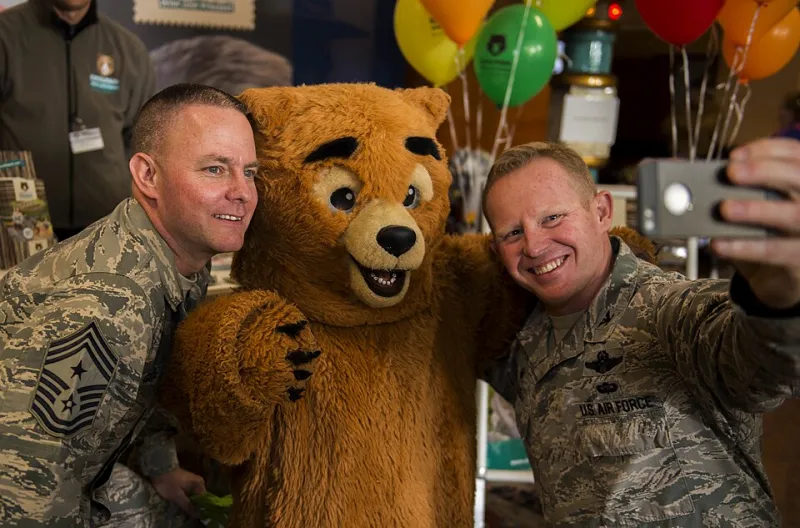
Photo: Airman 1st Class Timothy Kim, Public domain, via Wikimedia Commons
Ask a small community group what would help most and the answer is rarely a media strategy. It is usually a second kettle, a volunteer coordinator's petrol money, or a reliable lock for the storage cupboard. Communications sit at the bottom of a long list, and understandably so.
Yet the record of what a group does is part of the work. It helps you raise the next grant, reassure your committee, thank your volunteers and show your neighbours what their parish, ward or estate has built. Over the past year we have asked 2026 grant holders how they tell their story on almost nothing, and the answers were consistent, practical and rather cheering. Here are seven approaches worth trying.
1. Use the phone you already own
A modern smartphone camera is more than sufficient. The trick is consistency rather than equipment. Photograph the same thing at the same time each week — the queue forming at a lunch club, the allotment bed filling in, the reading circle gathering — and you build a record almost by accident.
Practical notes: take photographs in daylight near a window, hold the phone steady against a doorframe, wipe the lens on your sleeve, and take three frames rather than one. Landscape orientation is more useful for newsletters and websites; portrait suits social media. Never photograph a child, a vulnerable adult or a private moment without permission, and never photograph the inside of a food parcel as though it were a novelty.
One credit union outreach session funded this year keeps a simple weekly photograph log. Twelve months on, it has a timeline no professional could have scripted.
2. Get consent right, and keep it simple
Consent does not need to be complicated, but it does need to be recorded. A one-page form, plain English, explaining which photographs may be used, where, and for how long, with a named contact and a clear right to withdraw, will satisfy most funders and reassure participants.
For adults, verbal consent logged in a notebook is acceptable in many settings; for anything that will appear publicly, we would always advise a signature. Keep the signed forms together in one folder, scanned if possible, and check them before you publish rather than afterwards.
A befrienders' group in the east of the city now opens every session by explaining the consent process in two sentences, passes round a clipboard, and moves on. It takes less than a minute and has prevented several awkward conversations.
3. Write a one-page impact note, once a term
Forget lengthy annual reports. A single side of A4, updated each term, is enough: what you set out to do, who came, what changed, what surprised you, and what you would do differently. Add two photographs and a quotation with the speaker's permission.
Why one page? Because it gets read. Trustees read it, funders read it, and your local councillor will read it in a way they will never read a twelve-page document. Keep one master version and update it rather than starting afresh each time.
4. Pitch the local paper properly
Local media still exists, and it is short of stories that are not about roadworks. A short email — four paragraphs at most — should say what happened, who it helped, why it matters now, and who can be interviewed and photographed. Send it early in the week, and send a photograph rather than promising to supply one later.
Avoid the phrase "we are delighted to announce". Say instead that twelve people came to the first session and there are spaces for six more. Specifics get printed.
5. Borrow other people's audiences
You may have no mailing list, but the library, the leisure centre, the GP surgery, the mosque, the church porch and the housing association all have noticeboards and newsletters. Ask, politely and in writing, whether you can be included. Offer to write the item yourself, already sized to fit.
Several 2026 grant holders found that a single paragraph in a housing association's tenant bulletin brought more new participants than a month of social media posting. Partnership does not have to mean a formal agreement; it can mean a staple gun and permission.
6. Record a voice note instead of writing a case study
Not everyone writes comfortably, and not everyone wants to be filmed. A two-minute voice note, recorded on a phone with the speaker's consent, can be transcribed for a newsletter or played at an event. It captures tone and warmth in a way a written quotation rarely does.
Ask three questions: what brought you here, what has changed, and what would you say to someone thinking of coming along. Then stop talking and let the silence do its work.
7. End the year with a simple story page
Each December, set aside one afternoon with two volunteers and a pot of tea. Choose the six photographs that best represent the year. Write six short captions — who, what, where. Add the numbers you actually track: sessions held, people attending, volunteers involved, meals served.
That page then becomes your annual report, your funder update, your AGM handout and your next application's evidence section, all at once. It costs nothing but an afternoon.
Authenticity beats polish
The thread running through all seven suggestions is that the story is already happening. Nobody needs a designer to explain that a warm room was full on a Tuesday in January, or that a repair café saved a pensioner the price of a new toaster.
Our own guidance to applicants is deliberately relaxed on presentation and firm on honesty. A slightly wobbly photograph of a real Tuesday is worth more than a polished image of a session that never quite happened. If you are a grant holder and would like help shaping a story, our small grants team is happy to read a draft or suggest a local contact — and we will always ask first, in writing, before we share anything you send us.