Who Opens the Door When the Keyholder Cannot?

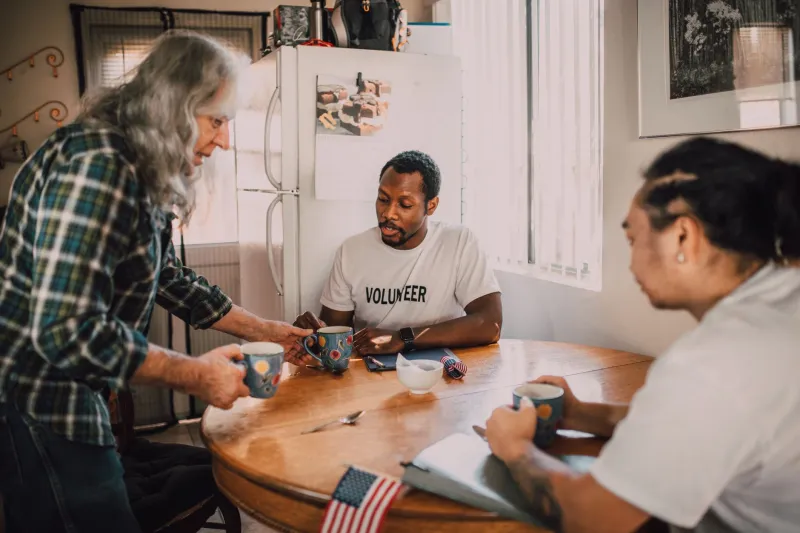
Photo: LeoBlanchette, CC0, via Wikimedia Commons
For many community buildings, the most important piece of equipment is not the boiler, the kitchen or even the defibrillator. It is the key ring in a volunteer's coat pocket. Alongside it sit an alarm code, a meter cupboard combination and a mental map of which window sticks in damp weather. These are the practical details that let a village hall, church room or community centre open its doors each morning. They are also, too often, the details that grant applications never mention.
The knowledge behind the key
Keyholding is rarely just about locks. The person who opens up often knows how to silence the alarm, reset the heating, find the stopcock, meet the contractor and satisfy the insurer's requirements. They may be the first to notice a leak, the last to lock up after a late meeting and the one who remembers that the fire exit needs checking before a large event. This is essential operational knowledge, but it usually sits with one person.
That arrangement can work well for years. It is also fragile. A retirement, a hospital stay, a bereavement or a move to be nearer family can interrupt access with little warning. The building does not need to be badly run for this to become a problem. It simply needs to rely on a single point of failure.
Why this belongs in a grant conversation
Public funding is intended to leave lasting assets behind, whether that means a refurbished hall, a better-equipped kitchen or a warmer meeting room. If a grant helps to create or improve a space, the funder has a legitimate interest in whether that space can continue to open. That interest should be proportionate, but it should not be left unspoken.
Application forms commonly ask about management committees, accounts, safeguarding and insurance. They rarely ask who else can open the building on a Monday morning. Yet the answer matters to the life of the grant. A capital investment can be undermined not by poor governance on paper but by the sudden absence of the one volunteer who knows how the alarm behaves after a power cut.
This is not a reason to doubt the dedication of keyholders. It is a reason to recognise what they carry. The aim is to protect both the building and the person who has been holding it together.
Succession is more than a spare key
Handing a second key to another committee member is a sensible start, but it is not a succession plan. A workable arrangement usually needs named deputies, a clear understanding of who may access which parts of the building, and a written record of alarm codes, contractor contacts and routine procedures. It should also be reviewed when trustees change or when a long-serving volunteer steps back.
Access should be shared on a need-to-know basis, recorded and kept up to date. A key register, a sealed emergency pack held by the chair and a short induction for deputies can all help. So can a simple access folder that explains how to open and close the building, where the fuse board is and whom to call if something goes wrong. These are modest documents, but they turn personal memory into shared knowledge.
There is a balance to strike. Too little sharing creates risk; too much creates its own problems. Alarm codes should not be circulated widely, and access should be reviewed when roles change. The point is not to remove trust from the volunteer. It is to make trust more resilient.
Simple improvements that fit a modest budget
Sometimes a small grant can make a real difference by funding practical, low-cost measures. Replacing worn locks, installing a key cabinet, adding extra alarm fobs or user codes, printing an access folder and paying for a short handover session are all modest items. Labelling the stopcock and fuse board may cost very little and save considerable time in an emergency.
Technology can help, but it is not automatically the answer. Smart locks and app-based access systems may suit some buildings, particularly where many groups share a space. They also require reliable power, connectivity, maintenance and attention to data protection. For other halls, a well-managed mechanical lock and a clear key register will be more appropriate. The right solution depends on the building, the users and the capacity of the committee to maintain it.
A small contingency for locks and alarms is often more useful than a larger item that cannot be maintained. Applicants should feel able to include these costs in a grant budget, and funders should recognise them as part of the infrastructure that keeps a building usable.
What we will ask, and what we will not
As a funder, we do not need to know the name of every keyholder. We do need to understand whether a building can function if the main keyholder is unavailable. For capital grants, a short continuity statement can be enough: who else can open the building, where access information is kept and how often the arrangement is reviewed. We can provide a simple template rather than adding another open-ended question.
For smaller grants, the conversation can be lighter. A sentence in the application or a note in monitoring may be sufficient. The intention is not to create a new compliance hurdle for volunteers who are already giving their time. It is to make continuity a normal part of planning, in the same way that insurance and safeguarding have become normal parts of community governance.
The question should be asked with care. 'Who else can open the building?' is not an accusation. It is a practical inquiry, and it can prompt a useful conversation among trustees before a crisis arrives.
A civic insurance policy
Community buildings are held together by many forms of unpaid work. The keyholder's role is one of the least visible and most essential. Grant-making cannot remove every risk, and it should not try to. But it can acknowledge that access, succession and simple maintenance are part of the life of a funded space.
A spare key is not a succession plan. A short conversation, a written procedure and a modest line in the budget can be. In that sense, planning for the day the keyholder cannot open the door is not an admission of fragility. It is a quiet act of civic care, helping to ensure that the lights still come on when the person who usually reaches for the switch is not there.